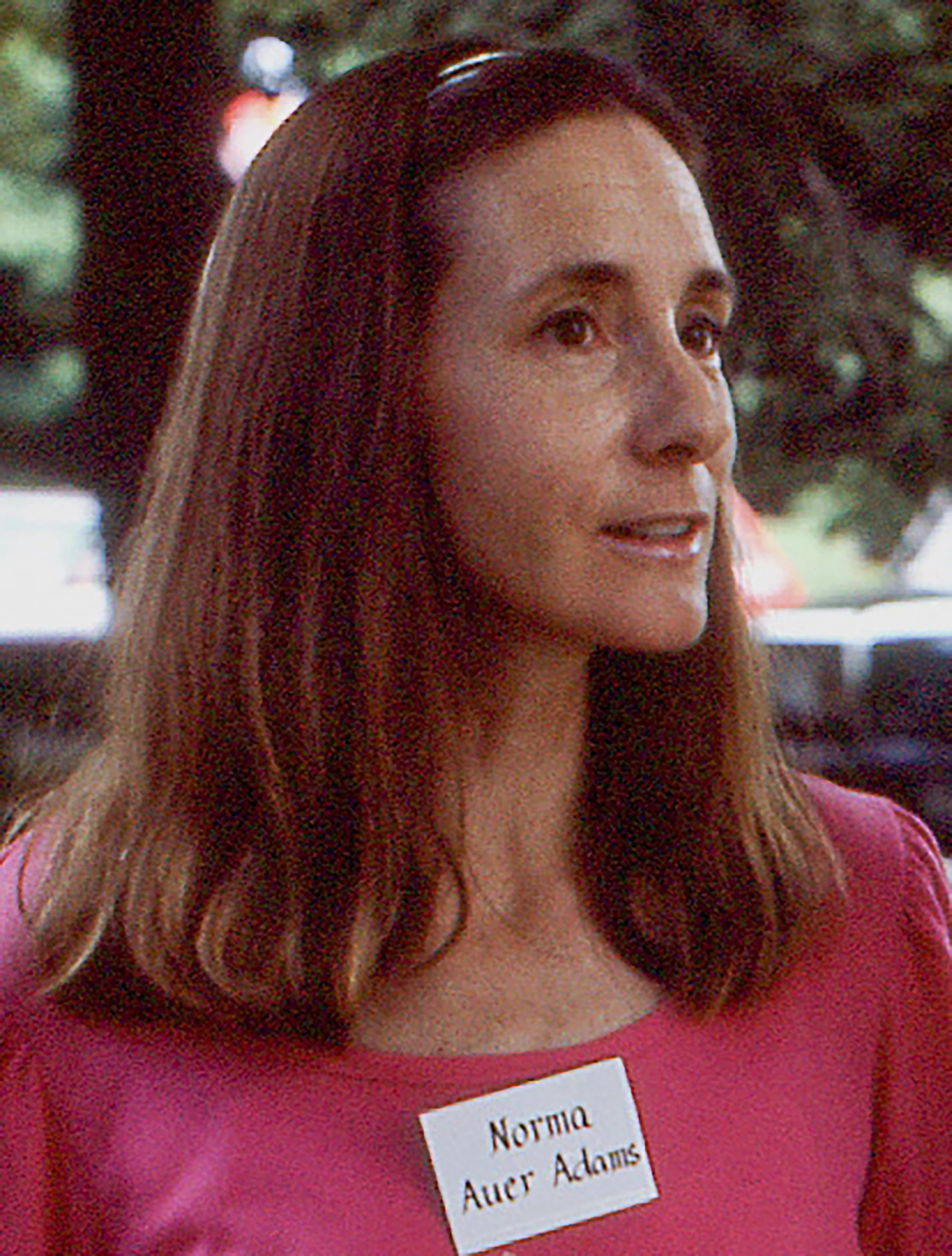
Artist’s Biography
Email: norma22(at)me(dot)com
Born: Sacramento, California – December 22, 1939
Education: BA/Art, Stanford University – June, 1961
Personal: married, four adult children
Residence: California, until 1980; New York 1980-1981;
Massachusetts, 1981-1998; Washington, 1998-2006;
California, 2006-2019; Colorado, 2019-present
By my sophomore year in college, I knew I wanted to make art my life’s work and declared as an art major. In my four years in college, I received a strong background in studio art and art history in Stanford’s art department, as well as an excellent education overall.
After college I married and began to raise a family. In 1972, I returned to making art. At the time, I chose to work in watercolor for the challenge it represented when I first took classes in the medium. In college, I came to know watercolor as a medium noted for its fluidity, and I also discovered its difficulty in application.
I painted in watercolor until the mid-1980’s, with my images becoming increasingly abstract. My method of painting – wet-in-wet – helped me develop boldly patterned paintings based on subjects found in nature. I was fascinated with the way watercolor acted and moved on water-saturated rag paper. Using the wet-and-wet technique, the colors produced were rich, deep and softly blended.
In January of 1980 I moved from a suburban environment in the Bay Area foothills of California to the heart of Manhattan. Going from California’s open spaces, where there was privacy to paint out-of-doors undisturbed, to the rigorous hustle-bustle of one of the biggest cities in the world, changed my painting life. I began to work from memory and use a camera to photograph subjects I’d previously been able to paint on-site, outdoors.
Late in 1981 I moved from Manhattan to Boston, choosing again to live in the heart of a major city. Still deeply committed to painting the outdoors, I found my nearest resources were well-groomed gardens in front of the brownstones along Commonwealth Avenue and its adjoining side streets. Flowers became one of my main subjects because they formed a major part of my nearest landscape, the city’s small gardens.
Bringing these and other images indoors through photography meant essentially freezing them in time. This gave me an opportunity to explore my subject in greater detail. Light and shadow, with their dramatic value shifts, became very important in defining form and they also gave a defining energy to my work.
As I became more interested in the details of my subject, I found myself putting more visual information into the paintings. I made a gradual transition from abstraction-based-on-reality to realism-backed-by-design or abstraction. My work grew larger – the images became larger within their space, and the pieces themselves became larger.
By the mid-1980’s, I made a transition from wet-in-wet watercolor to airbrushed acrylic, and from works on paper to works on canvas. Where I continued to make works on paper, the pieces tended to utilize the qualities paper has to be cut, torn, molded and pasted. While continuing to paint on canvas, I made works on paper that protruded from the surface in bas-relief and others that were structured into shallow-relief dimensional pieces. My subject matter, with my long-term interest in large florals on-going, I also began to focus on arresting images found in the American Southwest.
With a move to the state of Washington in 1998, I began to work with pastel. This became my primary medium, due to its plasticity and maneuverability on the paper. I approached working in pastel as a painting medium, which was more rigorous and challenging than simply using pastel as an extension of drawing.
As a professional artist, I have been represented by galleries in California, Manhattan and Connecticut, with representation that spanned more than 30 years. I have been retired as a professional, producing artist since 2002.